
Studios and hobby rooms
Garden studios and hobby rooms in Newcastle
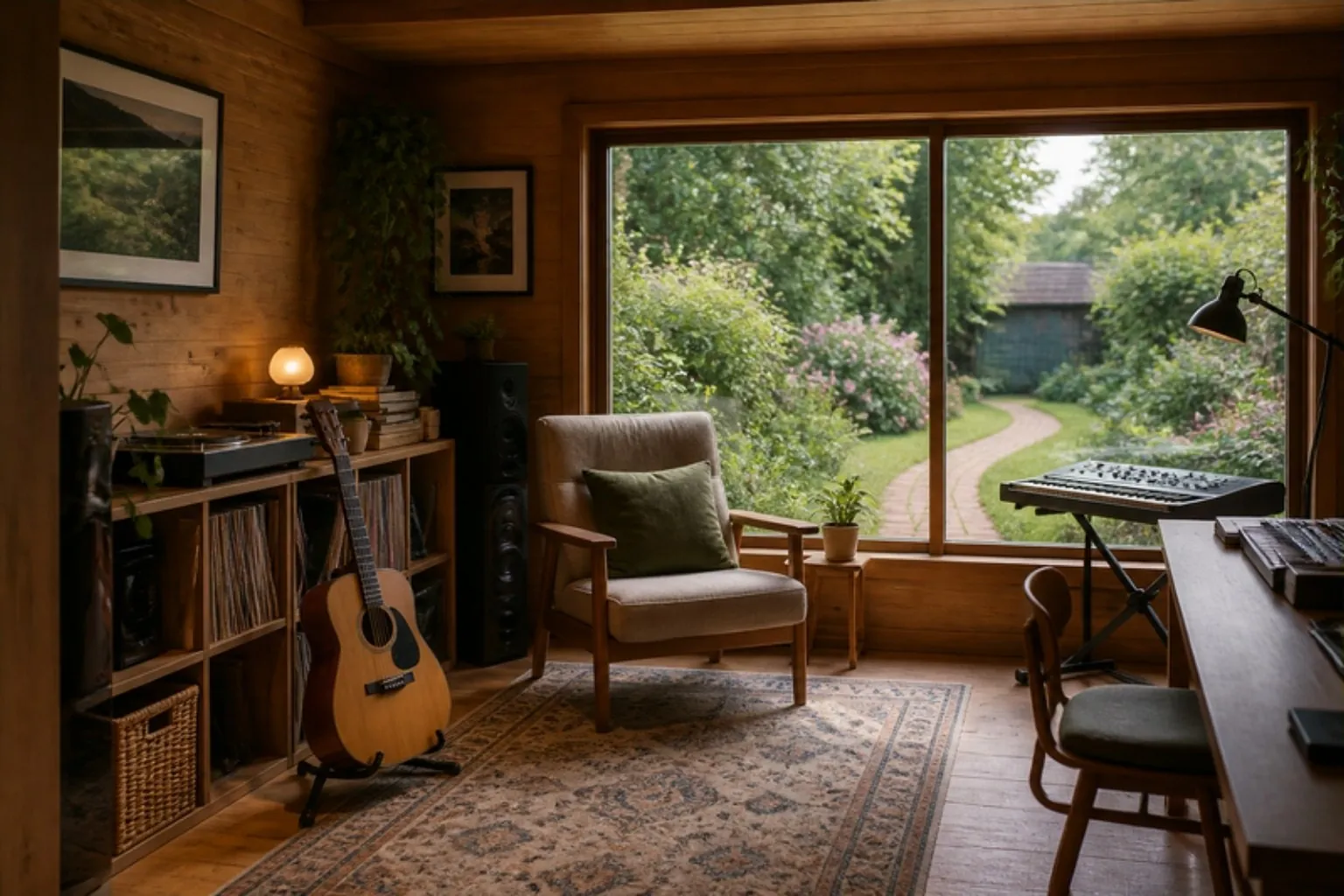
Painting on the kitchen table, a drum kit in the spare room, a sewing machine you put away every evening: a garden studio gives each of them a permanent home.
By craft
What different studios need
Art
Painting and drawing
Even, north-facing light, wall space to hang work, a sink if you can run water, and good ventilation for paints and solvents.
Music
Practice and recording
Extra insulation and acoustic treatment, fewer large windows, plenty of sockets and somewhere for cables to run tidily.
Making
Sewing, crafts and workshops
Worktops at the right height, task lighting, storage that keeps dust off, and a supply that suits your machines.
Wellbeing
Yoga and treatment rooms
Clear floor space, soft lighting, privacy glass or blinds and a comfortable temperature all year.
Glass-fronted studios
All the light, with a plan for it
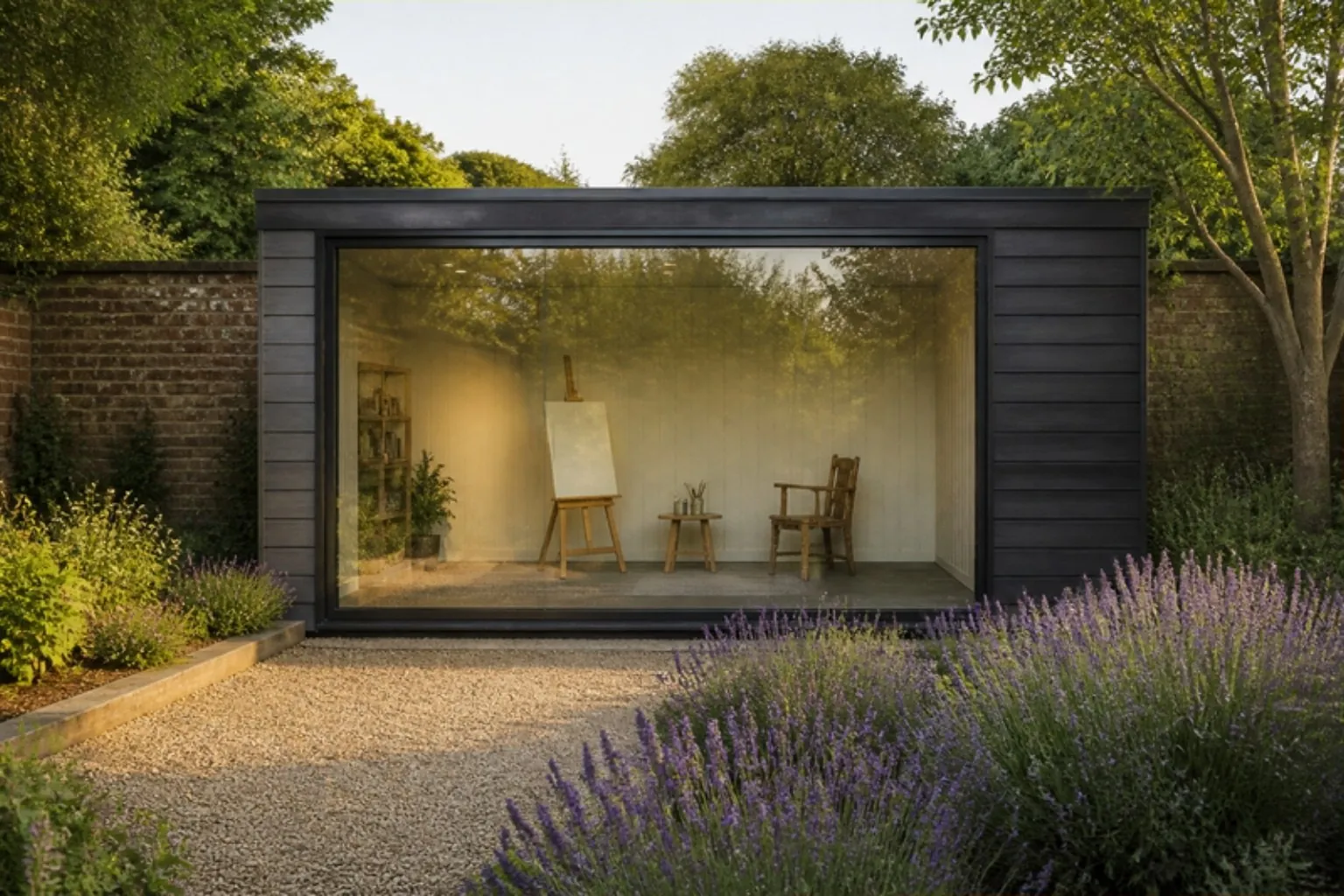
A fully glazed front makes a studio feel part of the garden. It also means more sun, more heat in summer and more privacy to think about.
Orientation, blinds, overhangs and the type of glass all help. Ask to see how the design handles a bright July afternoon as well as a grey January one.
Ask about
Studio details to raise at your consultation
- Window position for the light you want
- Acoustic insulation for music
- Water and drainage for a sink
- Extra circuits for kilns or machines
- Blackout blinds for screen work
- Shelving and wall fixings
- Flooring that's easy to clean
- Ventilation for fumes and dust
Next step
Plan your studio
Choose 'Studio' or 'Hobby room' on the form and describe what you'll be doing in there.
Questions
Common questions
Can I play drums in a garden studio?
Insulation and acoustic treatment reduce sound a great deal, but no garden room is fully soundproof. Discuss how loud and how late you'll play so the design can suit.
Can a studio have a sink?
Yes, if water and drainage can reach it. It adds groundwork, so raise it early.
Is a kiln safe in a garden room?
Kilns need a suitable electrical supply, clearances and ventilation. Follow the kiln maker's guidance and tell the installer at the start.